
Whoa! Ever noticed how some tokens just seem to move in perfect sync across different pairs or chains? Like, you watch one chart and bam—the other one’s already up 10%. It’s not magic or some insider whisper (well, maybe a little). This phenomenon, often called “mirror trades,” is a sneaky edge that many DeFi traders overlook. But here’s the catch: spotting these correlations early can be a game changer, especially when combined with tools like multichart views and early demand signals.
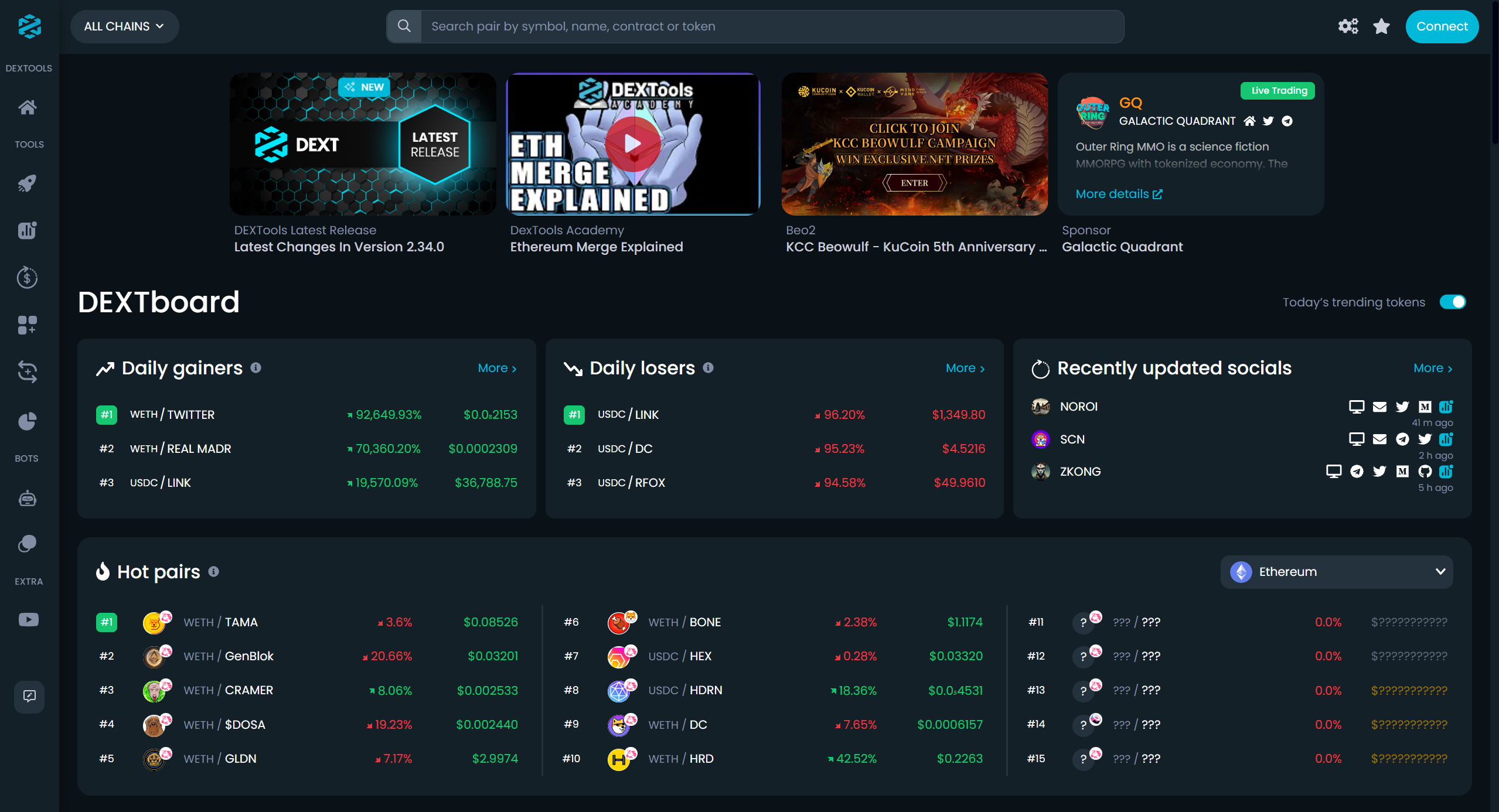
Okay, so check this out—if you’ve been poking around decentralized exchanges, you probably know Dextools.io as the go-to platform for live DEX data. But beyond just charts and volume, it offers features that help decode these subtle patterns. More importantly, learning to read mirror trades and correlate multiple charts simultaneously can put you ahead of the pack. But it’s not straightforward; there’s nuance, timing, and a fair bit of digging involved.
Initially, I thought mirror trades were just coincidences, or bots flipping contracts in tandem. But then I realized that many savvy traders and even whales use this strategy intentionally to hedge, arbitrage, or signal strength across pairs. It’s like a dance—one move here, a mirrored one there, creating ripples that ripple into waves. And if you miss the first step, you’re stuck playing catch-up.
Seriously, the more I dug in, the more I saw how multichart correlation isn’t just for whales or institutions. It’s accessible to anyone willing to spend time with the right tools and a bit of patience.
Here’s the thing.
Why Mirror Trades Matter More Than You Think
Mirror trades happen when buying or selling activity in one token pair replicates closely in another. At first glance, it might seem random. But those patterns can reveal early demand signals or coordinated moves by smart money. For example, you might see a whale simultaneously accumulating Token A on Ethereum and Token B on Binance Smart Chain, both linked by some thematic or project relationship. Or it could be the same token on two DEXs—liquidity is thin, so trades cause outsized price moves mirrored across platforms.
Thing is, these mirror moves often happen minutes or even seconds before broader market recognition. Catching them early can mean entering a position before the pump or selling before the dump. But it’s messy—mirrors aren’t perfect, timing varies, and bots can muddy the waters. So, patience and pattern recognition are key.
My instinct said these mirror trades were the hallmark of “smart money,” those elusive wallets moving quietly before news breaks or hype explodes. And the data backs it up: wallet tracking combined with multichart correlation reveals clusters of synchronized buys or sells, hinting at underlying strategies. (Oh, and by the way, if you want to get into this seriously, you should definitely check out https://sites.google.com/view/dextools-home. It’s the best place to start.)
On one hand, mirror trades can be a powerful signal. On the other, they can also be traps set by manipulators to lure retail into FOMO. So, context matters.
Multichart Correlation: How to Spot the Patterns
Using multichart displays, you can watch several token pairs side by side. The idea is simple but effective: look for correlated volume spikes and price movements across pairs or chains that point to coordinated activity. For example, if Token XYZ on Ethereum and Token XYZ on Polygon both jump simultaneously, that’s a red flag (or green flag, depending on your position).
What bugs me about some platforms is that they offer multichart, but the data lag or UI is clunky. Dextools.io nails this with smooth, near real-time updates and customizable layouts. You can set your charts to the same timeframe and apply different indicators to spot divergence or confirmation. Trust me, seeing a mirrored volume spike across multiple pairs just before a big breakout is like catching lightning in a bottle.
But here’s the kicker: not all correlations mean opportunity. Sometimes they’re noise or bots replaying trades. That’s why pairing chart observation with wallet tracking and liquidity pool data is critical. If you see smart wallets accumulating across pairs before a rally, that’s a much stronger signal than a random volume spike.
Actually, wait—let me rephrase that: the real edge comes from combining several layers of data, not just watching charts. The “big picture” view helps you filter out noise.
Early Demand Signals: The Key to Front-Running Moves
Early demand signals usually manifest as subtle upticks in volume, wallet activity, and liquidity changes before price surges. Traders who rely solely on price action are often late to the party. But by monitoring wallet transactions, especially those from consistently profitable traders, you can detect accumulation before it reflects on charts.
For example, wallets known for early entries might start adding tokens in small chunks across multiple pairs. Tracking these moves can hint at upcoming momentum. The tricky part? Distinguishing genuine accumulation from wash trading or bot activity. That’s where Dextools’ DEXTscore and contract verification details come in handy—tokens with verified contracts and locked liquidity paired with early wallet accumulation generally carry less risk.
Something felt off about relying only on social sentiment or Telegram hype for early signals. Often, pumps are coordinated social media blasts with no real foundation. Wallet tracking and liquidity pool monitoring provide a more objective lens.
Pro tip: set real-time alerts on volume spikes or liquidity changes for your watchlist tokens. This way, you don’t have to babysit charts all day. It’s like having a trading assistant whisper, “Hey, something’s brewing here.”
Putting It All Together: Your Tactical Playbook
So, how do you use mirror trades, multichart correlation, and early demand signals without losing your mind? Here’s my working method:
- Start with a curated watchlist of tokens you trust or want to explore, verified via Dextools’ scores and contract audits.
- Open multichart mode to monitor these tokens across different pairs or chains simultaneously.
- Track wallet activity for those tokens, focusing on wallets with history of profitable trades and early buys.
- Set alerts on volume spikes, price thresholds, and liquidity pool changes to catch sudden moves.
- Analyze mirror trading patterns—look for synchronized buys/sells across pairs, but confirm with wallet behavior and liquidity data.
- Cross-reference with social sentiment but don’t rely on it blindly—pump groups can fake hype.
This approach isn’t foolproof, but it’s a damn sight better than flying blind. And yeah, it requires discipline and patience. Many traders jump in at the peak, ignoring these subtle signs, and then wonder why they get rekt.
Oh, and one last thing: the interface complexity on Dextools can be overwhelming. Beginners might feel like they’re staring at the Matrix. My advice? Start simple—focus on price charts, liquidity, and wallet tracking before diving into advanced features. Once you get comfy, gradually layer in multichart views and alerts.
If you want a solid starting point, check out https://sites.google.com/view/dextools-home. It’s got everything you need to get your feet wet with these concepts without feeling lost.
When Mirror Trades Backfire—And What to Watch For
Here’s something that bugs me: mirror trades can sometimes be part of pump-and-dump schemes. Coordinated groups move tokens across pairs to create artificial volume and price action, baiting retail traders. Without careful scrutiny, you might get caught in the crossfire.
Watch out for these red flags:
- Single-wallet dominance in trades across pairs
- Sudden liquidity withdrawals after mirror buying activity
- Price spikes not supported by genuine community or project updates
- Contracts with low or no audit scores despite heavy volume
On the flip side, genuine mirror trades by smart money often come with steady volume growth, verified contracts, and locked liquidity. These subtle clues separate the wheat from the chaff.
Final Thoughts: The Subtle Dance of DeFi Trading
Mirror trades, multichart correlation, and early demand signals form a triad of insight that can elevate your trading game from guesswork to calculated moves. But it’s nuanced, and you gotta embrace some uncertainty. You won’t catch every move, and sometimes signals contradict each other. Hell, sometimes you’ll be wrong. That’s trading.
Still, with tools like https://sites.google.com/view/dextools-home, you’re not flying solo in the dark. The platform’s blend of real-time data, wallet tracking, and multichart views gives you a fighting chance. Just remember: patience, skepticism, and layering your insights make all the difference.
So next time you see a token jumping on one pair, glance at the others. Watch those wallets. Set your alerts. Don’t be the last to the party—or worse, the first to crash it.